Investor overview · Pre-launch
The AI food tracker for the GLP-1 era.
GLP-1s flipped the question from “how much did I eat?” to “did I get enough?” One in eight US adults now takes one, and calorie apps can’t answer it. FoodTrace turns a photo, label or sentence into the full nutrient picture, with honest ranges, connected to Apple Health. Launching on iPhone in early 2027.
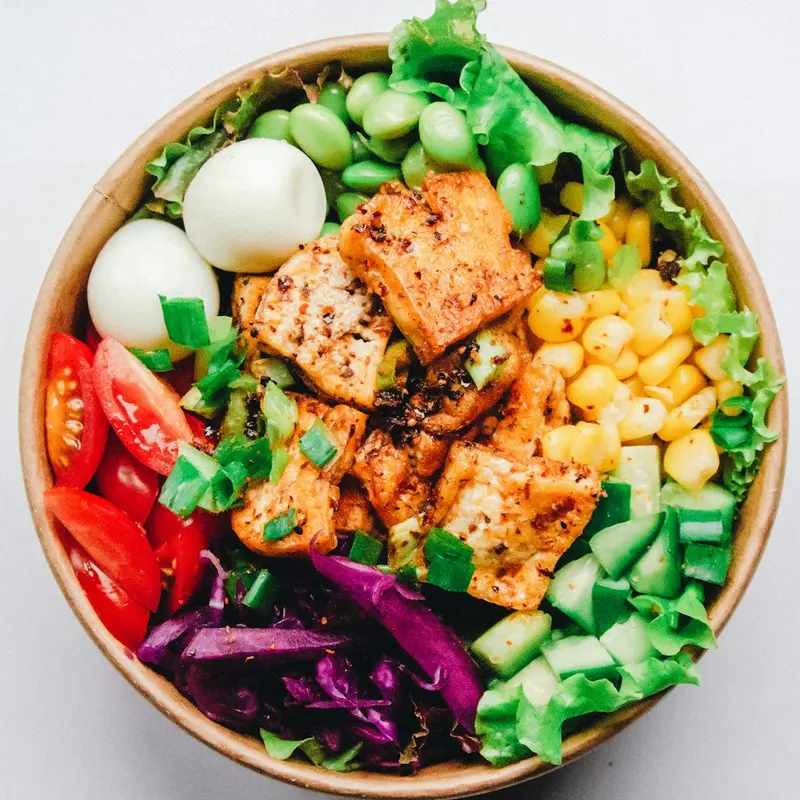
Crispy tofu power bowl
7 ingredients · 513 g
595
kcal ± 45
38 g
42 g
36 g
13 g
Vitamins & minerals · % Daily Value
- Folate80%
- Vitamin C60%
- Iron53%
- Calcium43%
Quick check: Was the tofu pan-fried in oil?
Design preview · launching early 2027
- US iPhone users who already track their weight or diet
39M
US iPhone users who already track their weight or diet
Our market math, from Census, YouGov and StatCounter data- of US adults currently take a GLP-1 drug, up from 6% in May 2024
12%
of US adults currently take a GLP-1 drug, up from 6% in May 2024
KFF Health Tracking Poll, Nov 2025- calories per meal that popular photo apps underestimated in a preliminary NIH-led test
250–345
calories per meal that popular photo apps underestimated in a preliminary NIH-led test
News-Medical summary of NIDDK research, Jul 2026- annual revenue at Cal AI within two years, per MyFitnessPal, which acquired it in 2026
$30M+
annual revenue at Cal AI within two years, per MyFitnessPal, which acquired it in 2026
TechCrunch, Mar 2026
The problem
People are tracking more and learning less.
About 39 million iPhone users already track their weight or diet. The tools give them a calorie number of uncertain accuracy and little else.
Calorie apps answer the wrong question
96% of Americans fall short on vitamin D from food and only 6% meet the recommended fiber intake — yet mainstream trackers center the calorie count and bury everything else.
Fast photo logging is still unreliable
In a preliminary NIH-led test of 102 meals, four popular photo-logging apps underestimated by roughly 250–345 calories per meal on average — especially fat. Numbers users can’t trust are numbers they stop logging.
Eating less makes every nutrient harder to hit
Four obesity and nutrition societies name protein adequacy and preventing micronutrient deficiencies as GLP-1 treatment priorities. Calorie-first apps help people eat less — which these users already do.
Why now
Four curves just crossed.
GLP-1s changed who tracks food
Current GLP-1 use among US adults doubled from 6% to 12% in 18 months. A joint advisory from four obesity and nutrition societies names protein adequacy and preventing micronutrient deficiencies as treatment priorities.
The category just consolidated
MyFitnessPal bought Cal AI (announced Mar 2026). The incumbent now owns the fastest photo logger and may fold it into its ads-and-calories model — leaving the nutrient-depth, no-ads position open.
Official guidance now sets a daily protein target
The Dietary Guidelines for Americans 2025–2030 set a protein target of 1.2–1.6 g per kg of body weight per day and advise limiting highly processed foods — both hard to follow without a tool.
The wearable data is already there
37% of US adults own a smartwatch, and iOS runs on a majority of US phones. Weight, steps and active energy already sit in Apple Health, waiting for a nutrition layer.
The product
Fast and thorough, by design.
Speed-first apps guess; detailed trackers take minutes. FoodTrace is designed to be both — and to show its work.
- MEAL
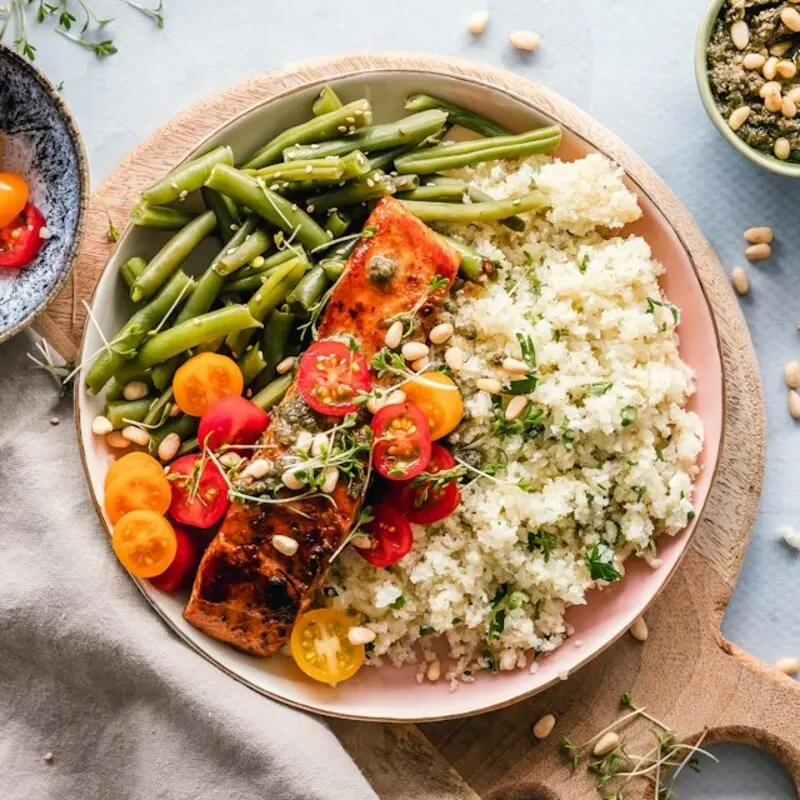 Found 6 ingredients
Snap
Point. It names what’s on the plate — and asks about the oil.
Label scan
Read in 1.2sNutrition Facts
1 bar (40g)
Calories
190
- Total Fat 8g
- 10%
- Sodium 140mg
- 6%
- Total Carbohydrate 26g
- 9%
- Dietary Fiber 3g
- 11%
- Incl. 12g Added Sugars
- 24%
- Protein 4g
INGREDIENTS: Whole grain oats, cane sugar, almonds, brown rice syrup, palm kernel oil, honey, rice flour, soy lecithin, sea salt, natural flavor.
3 forms of added sugar
Cane sugar, brown rice syrup and honey add up to 12 g — 24% of the Daily Value.
Contains tree nuts & soy
Matches 2 allergens in your profile.
Log 1 bar · 190 kcalAddScan
Hidden sugars and your allergens, flagged.
Log a meal
LunchListening…Type or say what you ate…Say
“Burrito bowl, double chicken, no rice.” Done.
Any input → full nutrient panel
Photo, Nutrition Facts label, ingredient list, barcode, text or voice resolve to ingredients and portions, grounded in a nutrition database rather than free-form model output.
Honest uncertainty
Each estimate carries a range. When the model can’t see something that matters — oil, dressing, portion depth — it asks one targeted question. Every answer improves our priors.
Adaptive energy balance
Activity from the Apple Health app is the starting estimate; the user’s smoothed weight trend corrects it. Targets update weekly, and users see plainly why.
App screens are design previews of the launch experience; values are illustrative.
Market
39 million iPhone users already track. 17 million take a GLP-1.
We launch with iPhone users who already track their weight or diet, and lead with the fastest-growing group around it: people on GLP-1 medications.
- Trying to lose weight138M
- US adults trying to lose weight
- 269.8M US adults × 51% trying to lose weight
- Already tracking, on iPhone39M
- iPhone users who already track their weight or diet — our launch market
- 269.8M × 27% who track weight or diet × 53.6% iOS share
- Beachhead17M
- US adults on a GLP-1 medication who use an iPhone
- 269.8M × 12% currently taking a GLP-1 × 53.6% iOS share
12–20%
annual growth forecast for diet & nutrition apps across research firms
Market research summaries (range)Sources: US Census Bureau, Vintage 2025 population estimates; IFIC 2025 Food & Health Survey; YouGov, Americans’ health tracking habits (2024); StatCounter, US mobile OS share (Sep 2026); KFF Health Tracking Poll (Nov 2025). The GLP-1 group overlaps the launch market but isn’t contained in it: many start tracking because of treatment. Our revenue model is shared one-to-one.
Business model
Freemium subscription in the best-converting app category.
A genuinely useful free tier drives adoption. Plus unlocks unlimited AI scans and the full nutrient picture. A capped free tier keeps per-user AI costs predictable.
Built to be kept
Food trackers live or die on month-two retention. Our bets: logging in seconds (photo, label, voice), no-shame design, a weekly target update that gives a reason to come back, and a GLP-1 audience with a months-long reason to keep logging — through dose changes and into maintenance.
| Benchmark | Value |
|---|---|
| Health & Fitness download-to-paid by day 35 (median / top quartile)RevenueCat, State of Subscription Apps 2026 | 2.9% / 6.2% |
| Trial-to-paid conversion, Health & Fitness (median)RevenueCat, State of Subscription Apps 2026 | 37.7% |
| Revenue per install by day 14, Health & Fitness vs. all appsRevenueCat, State of Subscription Apps 2026 | $0.48 vs $0.23 |
| Planned Plus priceFoodTrace launch plan | $9.99 / mo · $59.99 / yr |
Landscape
AI logging is table stakes. Depth for everyone isn’t.
MyFitnessPal bought Cal AI to get AI logging. What’s missing is depth for everyone: power-user trackers paywall AI and are built for data enthusiasts; mass-market apps stop at calories. FoodTrace brings a full nutrient picture, with honest error bars, to the mainstream.
MyFitnessPal + Cal AI
The incumbent bought the fastest-growing photo app (15M+ downloads, $30M+ annual revenue per MyFitnessPal). Photo, voice and barcode logging sit behind Premium.
MacroFactor
Adaptive expenditure and AI photo logging; no free tier; built for lifters. 200K+ paying users (Nov 2024).
Cronometer
The deepest micronutrient data (95+), built for data enthusiasts; AI photo logging is on the paid tier.
ChatGPT Health
Connects to the Apple Health app and MyFitnessPal. Great for questions; not built for a five-second daily log against nutrient targets.
GLP-1 programs (e.g. Noom, WeightWatchers)
Coaching bundled with a prescription; food logging is a supporting feature. They own the prescription; we want to own the plate. Likely partners, not rivals.
GLP-1 companion apps (e.g. Shotsy)
Dose and side-effect tracking, where nutrition is a field rather than the product. Likely partners, not rivals.
Defensibility
Why this isn’t a thin wrapper.
Foundation models are a commodity input. What compounds is the data, the per-user model and the trust.
- Why not ChatGPT?
- A chat isn’t a daily ledger. Tracking needs a five-second log, persistent targets and a database-grounded nutrient panel — every day, for months.
- Why not MyFitnessPal + Cal AI?
- Their free tier runs on ads and calorie counts. Rebuilding around nutrient adequacy and a no-ads promise fights their own model.
- Why not Apple?
- Apple builds the platform, not the opinion. The Apple Health app already stores nutrition data written by third-party apps. If Apple adds basic logging, it grows the category; label scanning, nutrient depth and a GLP-1 focus stay with specialists.
A correction loop general models never see
Every “was that cooked in oil?” answer and every edit shows us where photo estimates go wrong on real meals — hidden fats, portion depth, regional dishes. It tunes our priors and our questions, and it grows with every meal logged.
Gets more personal the longer you stay
Adaptive expenditure won lifters to MacroFactor. We bring it to mainstream users, starting from Apple Health activity and calibrating to each person’s weight trend — a reason to stay through month two.
Go-to-market
- 01
Waitlist → founding members
A founding-member price for waitlist sign-ups seeds a committed early base before the App Store launch.
- 02
GLP-1 communities and creators
Founder-led presence in the online communities where GLP-1 users compare notes, and with creators covering protein on GLP-1s; the waitlist tracks each source.
- 03
App Store search + launch
High-intent keywords — protein tracker, calorie counter, micronutrient tracker, label scanner — plus launch-week press.
- 04
Partners that own the prescription
GLP-1 companion apps and telehealth providers get a nutrition layer through the Apple Health app; their users get protein and nutrient tracking without a new account.
- 05
Trust as acquisition
No ads, no data sales, no cancellation traps — a reason to switch and a reason to recommend.
Later: share-with-your-dietitian reports as a bridge to dietitian, telehealth and employer programs.
Roadmap
Where we’re headed.
Q4 2026
Private beta with waitlist members
Early 2027
iPhone launch: Free + Plus, Apple Health sync, label & ingredient scanner
Mid 2027
GLP-1, plant-based and training modes; weekly check-ins
Late 2027
Android; share-with-your-dietitian reports
2028
Professional and employer programs
Timelines are plans and may change.
Talk to us
Founder bios and our full overview are shared one-to-one. Request a conversation and a founder will reply personally.
Request a conversationInvestor inquiries
Let’s talk.
We share company updates with investors and strategic partners one-to-one. Tell us a bit about yourself and a founder will follow up personally.
This website is for informational purposes only and does not constitute an offer to sell, or a solicitation of an offer to buy, any securities. Any such offer will be made only through definitive documents provided to qualified persons. Market figures come from the third-party sources linked above and have not been independently verified by FoodTrace. Statements about plans, products and markets are forward-looking and subject to change.